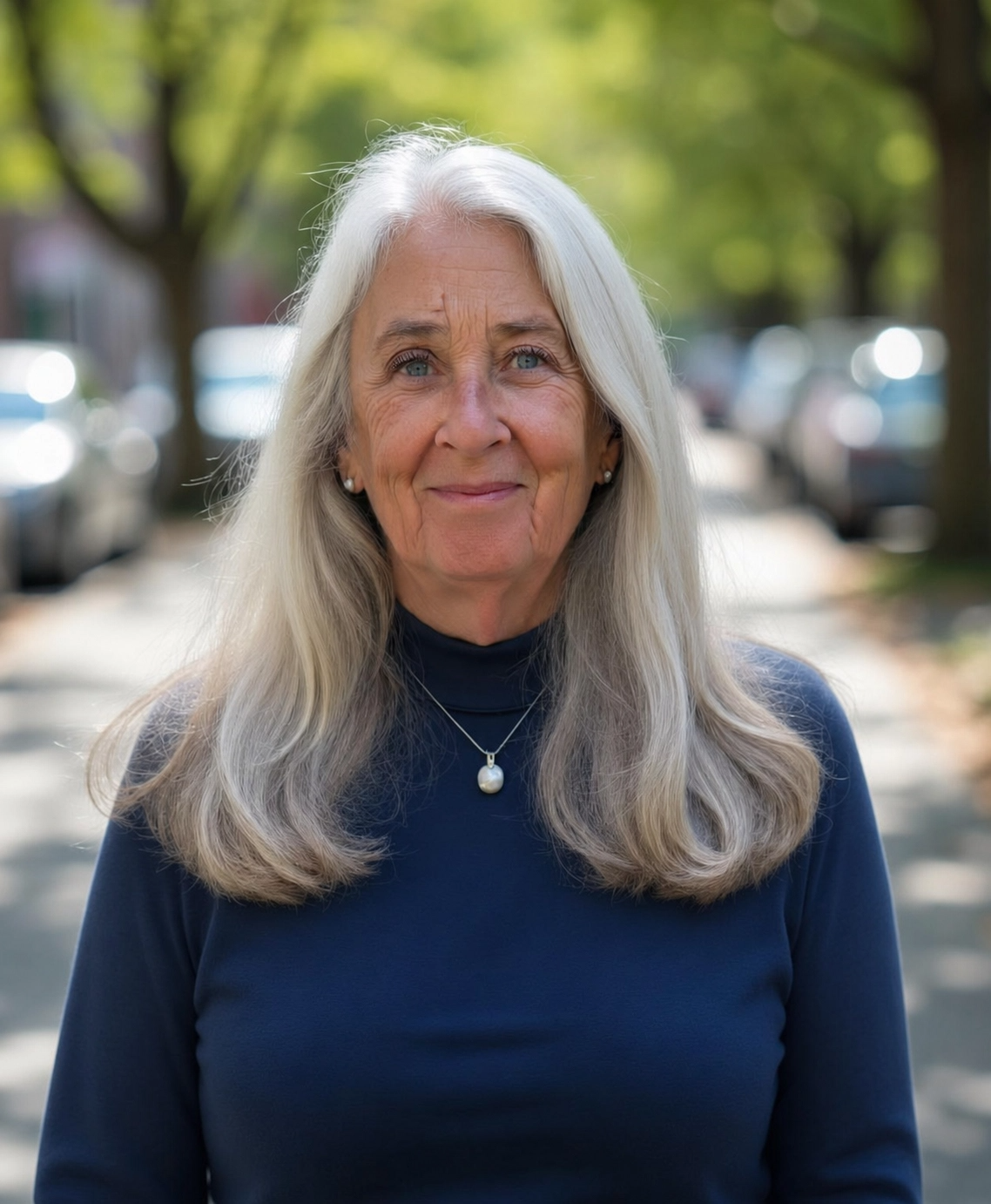
Over fifty years devoted to the art and science of healing
At seventeen, I became fascinated with plants and their capacity to heal. That curiosity led me to Vancouver Island, where I met a Mohawk woman named Norma Meyers. Norma took me in, and for nine months I lived in her attic surrounded by baskets of drying herbs, learning the old ways of plant medicine from someone who carried them in her bones.
From there, the path kept unfolding. I trained as a massage therapist and Jin Shin practitioner, then enrolled at the British Institute of Homeopathy because I wanted to understand the subtler dimensions of healing. I continued on to the Oriental Medical Institute in Hawaii, where I studied acupuncture and Chinese medicine, and eventually traveled to China to deepen that training at its source.
It was EAV testing that opened the next door. The technology pointed me toward Germany, where I began studying Neural Therapy, Darkfield Microscopy, and the principles of pleomorphism. These were not popular subjects in the English-speaking world at the time, but they changed everything I understood about the body and disease.
I lived in London for twelve years, building a practice and continuing to study with some of the most brilliant clinicians in Europe. During those years and since, I have lectured across the United States, Canada, the United Kingdom, Ireland, and Germany. Each place, each teacher, each patient added another layer to what eventually became a whole-systems approach to healing.
Today I bring all of those threads together in my clinical work and my teaching. More than fifty years of practice has taught me that the body is always trying to heal itself. Our job is to listen to it carefully, remove what is in the way, and provide what is missing.
I have always believed that real medicine begins with the individual, not the diagnosis. A label tells you very little about what a person actually needs. You could have ten people given the same medical diagnosis, and what each one requires to resolve it could be completely different. That is why I teach principles rather than protocols.
The feminine approach is not about gender. It is about receptivity. It is about trusting the body's intelligence and working with it rather than overriding it. It is about holding space for complexity instead of reducing everything to a single mechanism and a single drug. When we honor that complexity, we find that healing is not only possible but natural.
This is the approach I teach at The Morgan Institute. Not a rigid system of rules, but a living framework that adapts to each patient, each situation, each moment. My students learn to see the whole person and respond to what is actually there, not what a textbook says should be there.
I created The Morgan Institute because I saw a gap that no one else was filling. There are brilliant practitioners working in isolation, students hungry for knowledge that no single school offers, and patients who deserve better than the assembly-line medicine they are receiving. I wanted to build a bridge between all of them.
I want to connect with my students through real human heart connection. This is not passive learning. This is not watching recorded lectures and checking boxes. This is apprenticeship. It is the way medicine was taught for thousands of years before institutions turned it into a conveyor belt.
We are living in extraordinary times. There is more information available than at any point in human history, and yet people are sicker, more confused, and more disconnected from their own bodies than ever before. The Morgan Institute exists to restore that connection — between practitioner and patient, between ancient wisdom and modern science, between the head and the heart.
If that resonates with you, I invite you to learn more about our certification program and see if this path is yours to walk.
Vanessa with students during a clinical training intensive
The deepest practitioners are those who pass on what they know.
The Morgan Institute certification program is an intimate, mentorship-driven experience for practitioners who are ready to deepen their clinical skills and expand their understanding of whole-systems medicine.
Explore the Certification